
"green coffee structure"
1000 article(s) found

Introduction to Kenyan Jinchu Coffee with Green Tea Flavor and Fine Coffee
Kenya is divided into seven provinces (PROVINCE) and one provincial special district (Nairobi province). The following provinces are divided into districts (DISTRICT), townships (DIVISION) and villages (LOCATION). Under the new constitution, the four-tier administrative structure will be changed to the central and county (COUNTY) levels. The 47 counties established under the new constitution will be officially operational after the 2013 general election. The seven provinces are: central Kenya
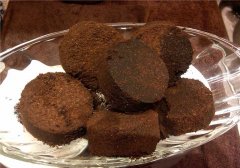
Li Ning applies coffee carbon fiber technology to create the most environmentally friendly sportswear
Science and technology lead the future and decorate life with green. Things that seem impossible can become possible in the eyes of those who are willing to do so. When people are constantly pursuing the function of exercise, is there a technology that does not bring pressure to the environment, but also makes you want to achieve moisture absorption and perspiration, anti-UV, deodorization and other functions? the answer is nothing is impossible! As the leading sports in China

Description of characteristics and Flavor of Burundian Coffee beans introduction to the area of manor production of grindness varieties
Burundian Coffee Bean introduces that there are two major ethnic groups in Burundi, and only about 15% of the Tutsi have ruled the country since the 16th century, controlling the civilian population, which is mainly made up of Hutu, plus the very rare aboriginal Twa. This abnormal social structure in which ethnic minorities occupy a high position has buried the instability of the country.

Basic knowledge of Coffee picking of raw coffee beans
After 3 or 4 years of growth, the coffee tree matures and begins to bear fruit, and the fruit will be arranged in clusters or clustered together along the branches. The coffee beans we see are the seeds of the coffee tree. The outside of the seed is a layer of pericarp, with the maturity of coffee beans, the pericarp will change from green to red, as soon as it turns red, it can be harvested. The structure of coffee fruit is that there is a layer of pulp (mesocarp) under the exocarp.
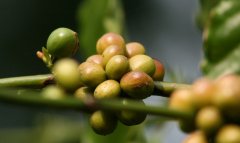
Characteristics of coffee fruit structure map! (including anatomical drawing)
Those beautiful coffee fruits! We often drink coffee, but few people have seen coffee beans, let alone coffee fruits. Some friends in the industry say that coffee is actually a kind of fruit juice, which I don't agree with. Fruit juice is a juice product obtained from fruit by physical methods such as pressing, centrifugation, extraction, etc. It generally refers to pure fruit juice or
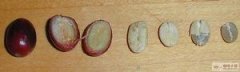
What are the steps and harvest time for picking coffee beans
After 3 or 4 years of growth, the coffee tree matures and begins to bear fruit, and the fruit will be arranged in clusters or clustered together along the branches. The coffee beans we see are the seeds of the coffee tree. The outside of the seed is a layer of pericarp, with the maturity of coffee beans, the pericarp will change from green to red, as soon as it turns red, it can be harvested. The structure of coffee fruit is usually a layer of pulp (mesocarp) under the exocarp.

The taste of Jamaican coffee is smooth. The manor area introduces boutique coffee beans.
One might ask, what makes Jamaican coffee so special? The answer is everything about it. Jamaican coffee is one of the most advantageous coffee growing conditions in the world. Jamaica's weather, geological structure and topography provide a unique ideal place. To the north-east of the island of Jamaica in Kingston. Coffee grows on a mountain with a maximum height of 1800 meters (about 6000 feet).

The basic knowledge of Coffee-Coffee growth habits
Coffee trees belong to the evergreen family of Akanaceae. They are tropical plants that are not cold. Most of them are planted in areas with elevations of 300,400m, and also in highlands with elevations of 2000-2500 meters. But those who plant on slopes above 1500 meters above sea level have better quality. Coffee trees are most suitable for growth when the average temperature is about 20 degrees Celsius, the annual precipitation is 1500-2000 mm, and the soil is permeable.

The growth environment and growth process of coffee trees introduce why Chinese people like Starbucks
Coffee beans are fresh and green coffee raw beans, which are obtained by removing red pulp, peel and silver skin from coffee fruit. The structure of coffee fruit is composed of outer skin, pulp, endocarp, silver skin and seeds. The shape is oval, usually the fruit of coffee is composed of two oval seeds opposite each other, and the other side is flat, so it is called flat bean, but it is also made up of

Li Ning applies coffee carbon fiber technology to create the most environmentally friendly sportswear to turn waste into treasure.
Science and technology lead the future and decorate life with green. Things that seem impossible can become possible in the eyes of those who are willing to do so. When people are constantly pursuing the function of exercise, is there a technology that does not bring pressure to the environment, but also makes you want to achieve moisture absorption and perspiration, anti-UV, deodorization and other functions? the answer is nothing is impossible! As the leading sports in China

Introduction to the Kenyan Jinchu Coffee Flavor Manor with a sweet aftertaste of green tea
Kenya is divided into seven provinces (PROVINCE) and one provincial special district (Nairobi province). The following provinces are divided into districts (DISTRICT), townships (DIVISION) and villages (LOCATION). Under the new constitution, the four-tier administrative structure will be changed to the central and county (COUNTY) levels. The 47 counties established under the new constitution will be officially operational after the 2013 general election, with a total population of 41.8 million.

One of the more sour varieties, Guatemalan coffee beans
Following Cafe Review (official Wechat account vdailycom) found that Guatemala Coffee, which opened a small shop of its own, once enjoyed the reputation of the best quality coffee in the world. Very hard beans are graceful, sour, clean and well-organized, as well as green apple, berry, jasmine, orange peel, green pepper, sweet and sour fruit, sweet chocolate, and even smoke in the aftertaste.

Introduction of flavor characteristic treatment method of Panamanian Ninety plus Baru volcano 90 + Rosa coffee variety
Professional coffee knowledge exchange more coffee bean information Please follow the coffee workshop (Wechat official account cafe_style) Rose summer coffee flavor comes from various nutrients in raw coffee beans during roasting, it is thermally degraded into various odors and molecular structures, producing flavors similar to various aromas. Good coffee beans are naturally rich in aroma, and there will be all kinds of nature at high, medium and low temperatures.

Boutique Coffee Science talk about Coffee Fruit
The fruit is a berry, also known as comb fruit. Oval, 9-14 mm long, young fruit green, red at maturity, purplish red. Each fruit generally has two seeds, but also one or three, showing a semi-oval, there is a longitudinal groove, called grooves. The structure of a fruit in which the exocarp consists of a thin layer of hardwood human cells with stomata; the mesocarp (that is, pulp) is large and Lignified by several layers of polygons.
Li Ning applies coffee carbon fiber technology to create the most environmentally friendly sportswear to turn waste into treasure.
Bamboo charcoal fiber and coconut carbon fiber have come into our lives, so can these coffee grounds also turn waste into treasure, reduce the burden on our environment, and produce a large number of high-quality raw materials at the same time? If so, the coffee in our hands must feel more mellow and delicious. The answer is yes. Coffee carbon fiber has been developed and applied.

Kenyan coffee plantations with fruit flavours Taste characteristics Boutique coffee Introduction
Kenya is divided into seven provinces (Province) and one provincial district (Nairobi Province). The province is divided into districts (DISTRICT), townships (DIVISION) and villages (LOCATION). According to the new Constitution, the four-tier administrative structure will be changed to two levels, central and county (COUNTY). The 47 districts established under the new Constitution will be fully operational after the 2013 general elections. 7 provinces: Central Kenya

Interesting baking curve (1) the problem of bean temperature and temperature recovery point
Professional barista communication please follow the coffee workshop (Wechat official account cafe_style) Rosting Curve this picture is also Karl Schmidt, one of the slide of The Art Science of Roasting, when I saw this baking curve, it immediately aroused a lot of feelings for me, because there are a lot of things to discuss, I like it very much, so here

Coffee knowledge the growth trainee of coffee trees
Coffee trees belong to the evergreen family of Akanaceae. They are tropical plants that are not cold. Most of them are planted in areas with elevations of 300,400m, and also in highlands with elevations of 2000-2500 meters. But those who plant on slopes above 1500 meters above sea level have better quality. Coffee trees are most suitable for growth when the average temperature is about 20 degrees Celsius, the annual precipitation is 1500-2000 mm, and the soil is permeable.
About the coffee fruit.
The fruit is a berry, also known as comb fruit. Oval, 9-14 mm long, young fruit green, red at maturity, purplish red. Each fruit generally has two seeds, but also one or three, showing a semi-oval, there is a longitudinal groove, called grooves. The structure of a fruit in which the exocarp consists of a thin layer of hardwood human cells with stomata; the mesocarp (that is, pulp) is large and Lignified by several layers of polygons.

Introduction to the characteristics of Burundian Coffee flavour Manor with Fruit Flavor
There are two major ethnic groups in Burundi, and only about 15 percent of the Tutsi have ruled the country since the 16th century, controlling the civilian population, which is mainly made up of Hutu, plus a very small number of indigenous Twa. This abnormal social structure in which ethnic minorities occupy a high position has buried the evil seed of national instability, and in 1